A site is a sales process, not a brochure
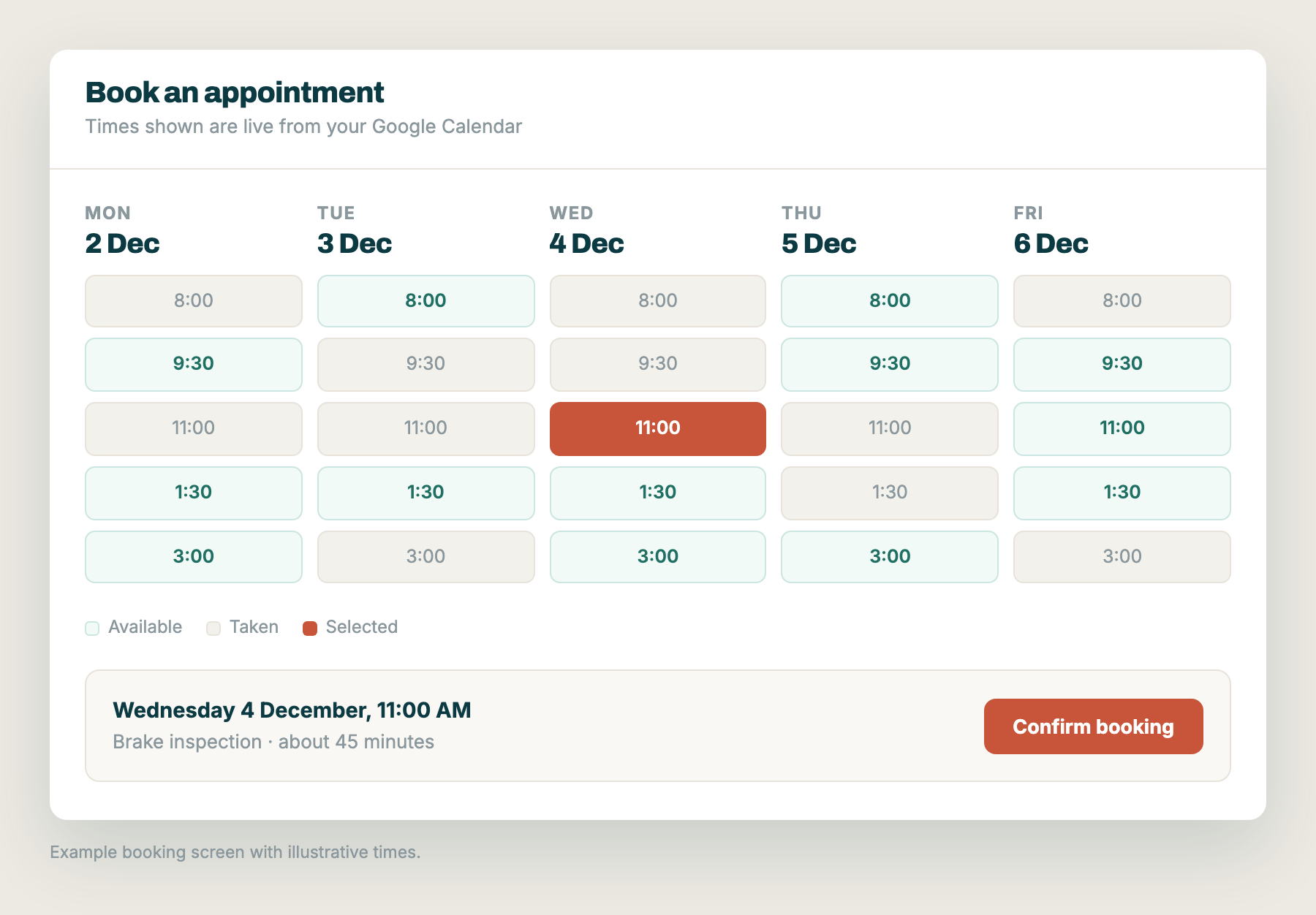
Most small business sites fail at one specific point: someone arrives ready to act and the site makes them work for it. The phone number is an image. The booking link goes to a contact form. The services page lists forty things so nothing stands out. We design backwards from the action you want, then remove everything in its way.
Phone first, because that is where it is read
The majority of local search happens on a phone, often one-handed, often outdoors. That changes the design: bigger tap targets, a call button that never scrolls away, text that survives bright sunlight, and images that do not cost three seconds of load time on a weak signal.
Written for how people actually search
Pages match real queries rather than internal job titles. Nobody searches for "hardscape solutions" — they search for a cracked driveway. One page per thing people actually want, each one able to rank on its own.
Fast, because speed is a ranking factor and a courtesy
Static pages, modern image formats, no page builder shipping a megabyte of JavaScript to render a heading. Sites we build load in about a second on a mid-range phone.
What a page has to do in four seconds
Someone arrives from a search with a problem and a phone. In the first screenful they need to know what you do, that you cover their town, and how to start — without scrolling, pinching or reading a paragraph about your passion for quality. Everything else on the page is for the minority who want more. Designing for that order is most of the job.
Owning it is not a detail
Plenty of agencies build on a platform where leaving means losing the site. We register the domain in your name, hand over the files on request, and keep nothing as leverage. If that sounds like table stakes, ask your current provider what happens to your site if you stop paying.